If you’ve been following the long, sometimes dramatic saga of the “green bubble,” you know that while Apple finally played nice by adopting RCS (Rich Communication Services) back in late 2024 with iOS 18, there was a glaring omission: native security. Messages sent between iPhones and Androids were better, sure, but they weren’t end-to-end encrypted (E2EE) by default in the way iMessage or Signal chats are.
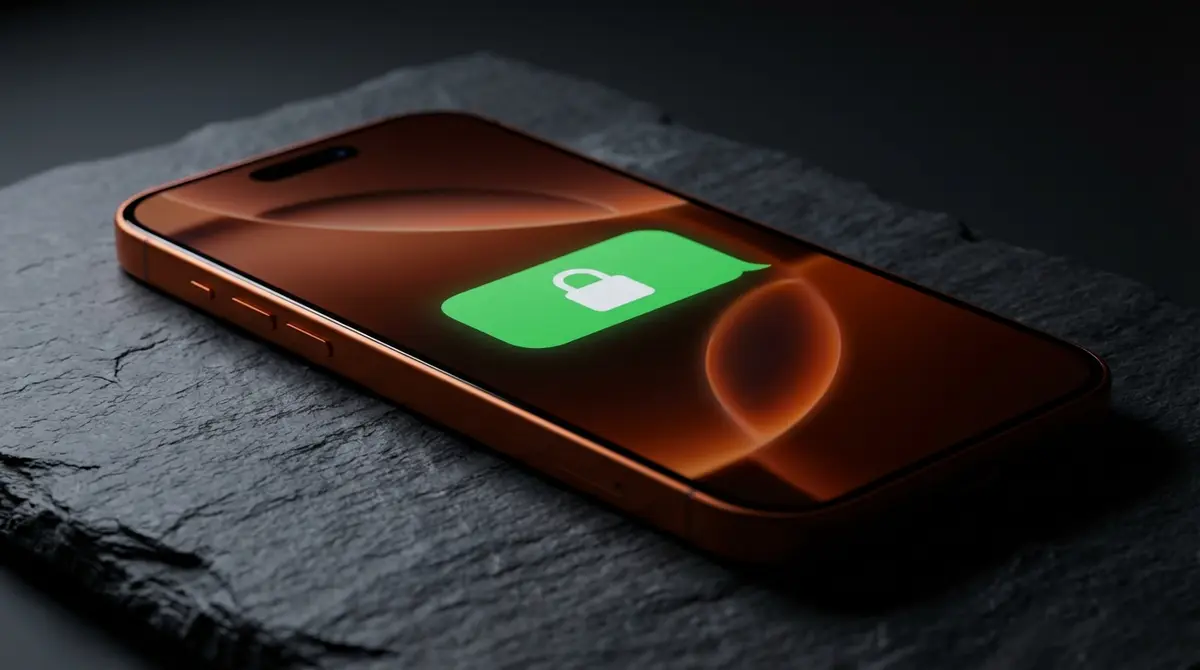
That changes now—or at least, the change is officially in motion. On February 16, 2026, Apple released the first developer beta of iOS 26.4, and tucked inside the release notes is the confirmation many privacy advocates have been waiting for: Apple is starting to test end-to-end encrypted RCS messages.
This is a massive step for cross-platform privacy, but as with most things involving standards bodies and carrier protocols, it’s not quite as simple as flipping a switch. Let’s break down what’s actually happening in this beta and why your texts to Android friends aren’t fully locked down just yet.
What is Apple actually testing in iOS 26.4?
According to Apple’s release notes for the iOS 26.4 beta, developers can now test encrypted RCS conversations. However, there is a significant catch for this initial rollout. Apple has stated that this testing phase is currently limited to RCS conversations between Apple devices.
This might sound counterintuitive—why send RCS messages between iPhones when iMessage exists? For testing purposes, developers can disable iMessage to force the device to fall back to RCS. In this specific scenario, the beta software is successfully applying encryption.
The company has explicitly noted that the feature is “not yet testable with other platforms.” This means if you are running the iOS 26.4 beta and texting someone on an Android device, that encryption handshake isn’t happening yet. Furthermore, Apple has clarified that while testing has begun, the feature won’t ship to the public in the final release of iOS 26.4. Instead, it is slated for a “future update,” likely later in the 2026 software cycle.
Why is the industry moving to the MLS protocol?
To understand why this is taking until 2026 to implement, we have to look at the underlying tech. When Apple first adopted RCS in iOS 18, they used the Universal Profile 2.4 standard. That version of the standard did not have native end-to-end encryption built-in. At the time, Google had solved this on Android by building their own proprietary encryption extension, but that wasn’t a universal standard—it was a Google add-on.
Apple, along with the GSMA (the standards body for the mobile industry), pushed for a standardized approach that didn’t rely on one company’s proprietary tech. The result is Universal Profile 3.0, which incorporates the Messaging Layer Security (MLS) protocol.
The testing we are seeing now in iOS 26.4 is the implementation of this MLS protocol. It represents a shift away from proprietary patches toward a unified, industry-wide standard for secure messaging. By waiting for Universal Profile 3.0, Apple ensures that its implementation aligns with global standards, theoretically allowing for a more robust and truly interoperable security framework than if they had simply adopted Google’s earlier method.
Why is the operating system called iOS 26?
You might have noticed the version number jumping significantly. If you haven’t upgraded your device in a while, seeing “iOS 26” in 2026 might seem like a typo, considering we were on iOS 18 in late 2024.
According to reports from MacRumors, Apple has restructured its naming convention to align its operating system version numbers with the calendar year. This is why we skipped from the teens directly to the twenties in version numbering. The release of iOS 26.4 arrives alongside the macOS Tahoe 26.4 beta, unifying the ecosystem under this new “year-based” identity.
This shift coincides with broader aesthetic changes, such as the adoption of the ‘Liquid Glass’ design language introduced in the main iOS 26 release, and hardware updates like the iPhone 17 Pro series, which launched in late 2025 featuring the distinct ‘Cosmic Orange’ colorway.
What To Watch
The move to MLS-based encryption is a victory for open standards over proprietary dominance. While Google deserves credit for pushing RCS forward, Apple’s insistence on waiting for the GSMA’s Universal Profile 3.0 ensures that encryption isn’t controlled by a single vendor’s extension. The real test will be carrier support; historically, carriers have been the bottleneck for RCS updates. If carriers drag their feet on supporting the MLS protocol in their network profiles, this “future update” could face deployment friction regardless of when Apple ships the code.
![Illustration related to iOS 26.4 RCS Encryption: Green Bubbles Secured [Update]](https://story.bytewire.press/wp-content/uploads/bytewire-images/2026/02/apple-starts-testing-end-to-end-encrypted-rcs-ios-26-4-65a35b7186.webp)
![Diagram related to iOS 26.4 RCS Encryption: Green Bubbles Secured [Update]](https://story.bytewire.press/wp-content/uploads/bytewire-images/2026/02/apple-starts-testing-end-to-end-encrypted-rcs-ios-26-4-01f1710072.webp)